3D Animation in Healthcare: The Key to the Validation and Commercialization of Medical Devices
The healthcare and medical technology (MedTech) industry is advancing by leaps and bounds. Innovations in biomedical engineering, next-generation implants, and robotic surgery tools are developed daily in laboratories around the world. However, this sector faces a unique commercial and educational obstacle: How do you explain the functioning of a device that operates inside the human body, at a microscopic scale, or through minimally invasive procedures?
Filming in real environments or with real surgical instruments presents serious limitations: mucosal tissue, biological fluids, and confined spaces obstruct visibility, not to mention the ethical and logistical complexity of recording live surgeries. In this scenario, high-precision Medical 3D Animation has established itself as the gold standard for laboratories, device manufacturers, and the international scientific community.
1. Visualization of Medical Devices (MedTech) Without Barriers
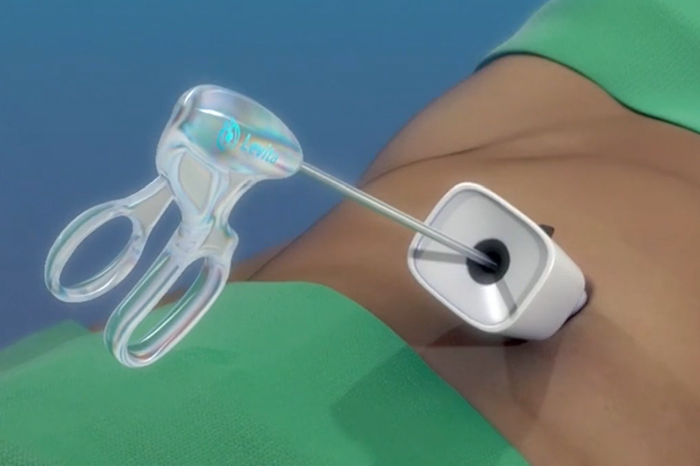
When a biomedical startup or a multinational pharmaceutical company needs to present a new catheter, an orthopedic prosthesis, or a drug delivery system, it requires showing the details of its internal engineering in a photorealistic way.
3D animation allows skin or arterial walls to become translucent to observe exactly how a *stent* expands, how a mechanical suture interacts with tissue, or the exact path of an endoscope. This is crucial not only for presales marketing to surgeons and hospital purchasing committees but also to accelerate regulatory approval processes with health entities.
2. Mechanism of Action (MoA): The Cellular Journey
Explaining the impact of a drug or a biological treatment requires descending to the molecular level. 3D medical animation acts as a high-definition virtual microscope. It allows us to rigorously illustrate the Mechanism of Action (MoA): how a molecule travels through the bloodstream, docks to a specific cellular receptor, and triggers a therapeutic response.
Translating complex data from scientific and abstract publications into a dynamic and fluid animated sequence helps sales teams and medical specialists understand the real value of the innovation in seconds.
"In medicine, visual precision equals trust. A professional medical animation eliminates guesswork, allowing surgeons, investors, and regulators to see with scientific accuracy what the human eye cannot capture."
3. Advanced Surgical Training and Clinical Education
The learning curve for using a new medical device or mastering an innovative surgical technique can be complex. Printed manuals and static diagrams are insufficient to convey the three-dimensionality, applied force, or insertion angle required in an operating room.
Through 3D animated simulations, specialists can study the procedure step by step in clean, perfectly lit virtual environments. Key anatomical structures (nerves, blood vessels, bones) are isolated to train medical staff with absolute clarity, reducing operational errors and improving patient safety.
4. Empathetic Patient Communication
Fear of the unknown is one of the highest anxiety factors for patients undergoing surgery or complex treatment. Showing real medical images can be shocking or incomprehensible. The use of Motion Graphics and animated modeling allows educating the patient in a friendly way, explaining what their procedure consists of, what to expect from their device, and what their recovery process will be like, significantly improving their clinical experience.
The V-Sense Signature in Medical Animation
Creating animations for the medical field requires the perfect combination of two worlds: the artistic sensitivity to achieve visually appealing, cinematic-quality pieces, and the technical rigor to interpret complex scientific data. At V-Sense, we combine design, technology, and precision so that your healthcare innovation is understood, validated, and adopted by the global market.